
Bajaj Auto is set to launch new Pulsar motorcycles in the 125cc and 150-250cc segments in Q2 FY27, aiming to capitalise on the upcoming festival season surge. This move follows strong growth in the 150cc-plus segment, where refreshed Pulsar models already account for over 50 per cent of Bajaj's sales.

Maruti Suzuki has discontinued its Ignis hatchback due to weak sales and a shift towards SUVs, while simultaneously facing supply chain issues for its popular S-Presso and WagonR models, leading to booking halts at some dealerships.

JSW MG Motor India will launch four new models this year, and is planning to invest between 3,000 crore-4,000 crore in the country over the next couple of years. The new models include a plug-in hybrid, an electric vehicle, the Majestor SUV and one additional model yet to be disclosed.

Automobile retail sales rose nearly 18 per cent year-on-year to over 27 lakh units in January, led by continued post-GST momentum, healthy rural cash flows on the back of harvest and weddings, and sustained demand visibility across freight, dealer's body FADA said on Tuesday.

Bajaj Auto reported a significant increase in its consolidated Q4FY26 performance, with profit after tax more than doubling to approximately 3,662 crore, a 103 per cent year-on-year rise, primarily driven by record volumes, an improved product mix, and the strategic consolidation of Bajaj Auto International Holdings AG (BAIHAG).

Electric vehicle (EV) penetration in the luxury car segment has seen a drop by nearly 3 percentage points in the GST 2.0 era with the internal combustion engine versions offering better total cost of ownership, according to industry players. While the trend is also visible in the mass market segment, it is the entry luxury segment that is witnessing a more marked shift towards internal combustion engine (ICE) vehicles as price difference between EV and ICE widened under the new GST rates.

India's electric passenger vehicle market saw an 87.4 per cent year-on-year increase in FY26, reaching 233,246 units, primarily driven by the mid-size SUV segment (20-30 lakh price bracket), while the entry-level segment (sub-10 lakh) experienced a decline.

Opposition leaders have criticised Prime Minister Narendra Modi's address to the nation, calling it politically motivated and a misuse of official platforms during ongoing elections.

While GST on ICE vehicles was brought down significantly, for electric cars it remained at 5 per cent.
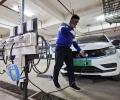
India's electric vehicle (EV) market experienced a significant surge in financial year 2025-26 (FY26), with e4W registrations nearly doubling and e2Ws growing by over 20%, propelled by expanding charging infrastructure, diverse model launches, and accessible financing.
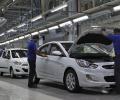
Domestic automobile retail sales in India experienced a significant surge of 26 per cent year-on-year in February, driven by improved affordability and market confidence across various segments, according to FADA.

India's luxury auto market is rebounding after a slow start to 2025, with GST 2.0 emerging as the main catalyst.

'The market is still very bullish. The demand is so strong that for eight models, we have no units in our factories to dispatch to dealers,' said Partho Banerjee, senior executive officer, marketing & sales, Maruti Suzuki India (MSIL).
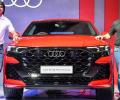
German carmaker Audi plans to reassess and adjust its product launch strategy in India once the specific details of import duty reductions under the India-EU free trade agreement (FTA) become clear, according to Balbir Singh Dhillon, the brand's director in India.

The reduction in goods & services tax (GST) on individual life and health insurance premiums has been called a "landmark step" for making insurance affordable and inclusive. In a panel discussion at the Business Standard BFSI Insight Summit 2025, Anup Bagchi, managing director (MD) & chief executive officer (CEO) of ICICI Prudential Life Insurance; Mahesh Balasubramanian, MD & CEO of Kotak Life Insurance; Tarun Chugh, MD & CEO of Bajaj Life Insurance; and Ratnakar Patnaik, MD of Life Insurance Corporation of India (LIC), listed what else the industry needs to reach more people.

Since the Indian government reduced GST on small cars on September 22, the small car segment's share in Maruti's overall sales has risen to more than 25 per cent, up from 16.6 per cent earlier in FY26.

'In the January-August period, the share of hatchback in the overall PV industry sales was about 22.4 per cent. In the September-October period, the share of hatchbacks has come down to 20.4 per cent. In just October, their share was just 20 per cent. This is simple wholesale data from industry body SIAM.'

A new survey indicates that Indian employers are planning to increase hiring in the April-June quarter, driven by strong business confidence and domestic demand. The survey also highlights the impact of AI adoption on workforce strategy and the challenges of talent scarcity.

India's two-wheeler industry is seen growing 6-9% in 2026, though a proposed ABS mandate for sub-125cc models could push up prices and temper volumes.

Czech carmaker Skoda plans to bring more of its global nameplates into the Indian market as it looks to cater to a diverse set of customers, according to a senior company executive. The company, which now sells products in India ranging from over Rs 7 lakh to upwards of Rs 40 lakh, however, has no immediate plans to introduce electric cars in the country.

The small sports utility vehicle (SUV) segment - comprising models less than 4 metres in length - could witness the "maximum" growth among all categories in the coming months following the recent goods and services tax (GST) rate rationalisation, Tarun Garg, chief operating officer of Hyundai Motor India (HMIL), said.

Two-wheeler (2W) major Bajaj Auto on Friday posted its highest ever quarterly revenue and profit during the third quarter of 2025-26 (Q3FY26). Bajaj Auto's consolidated net profit for the quarter grew by 25 per cent year-on-year (Y-o-Y) to Rs 2,749 crore, with the revenue also growing 23 per cent to Rs 16,204 crore.
The change in the peak rate will not alter the 4-slab rate structure of 5, 12, 18 and 28 per cent agreed upon last year, but is only a provision being built into the model law to take care of contingencies in future, two officials in the know told PTI.

Government schemes such as the PM E-Drive initiative, with allocations of around Rs 2,000 crore for charging points deployment, are helping accelerate rollout

Despite a 2.8 per cent fall in 2025 volumes, Mercedes-Benz India reported its best-ever revenue and profitability, led by top-end models, AMG growth and higher BEV mix.

'Some buyers get carried away by festival offers and purchase higher variants or larger vehicles than they truly need, which impacts running cost and long-term affordability.'

Skoda India is focusing on cleaner fuel options, including CNG and EVs, while compact SUV Kylaq drives volumes, expands first-time buyers and strengthens the brand in India's competitive market

The Union Cabinet, meeting at the new PMO complex 'Seva Teerth', resolved to prioritize citizen empowerment and service in all its decisions, guided by the principle of 'Nagrik Devo Bhava'.

Starting January, the market is expected to welcome models like the Tata Punch 2025 which is expected to be around 6 lakh, Mahindra BE 07 EV around 29 lakh, Maruti WagonR Electric around 8.5 lakh, Toyota 3-Row SUV around 14 lakh, and Volkswagen Tera to be around 8 lakh.

The stock of automative major Eicher Motors hit its all-time high on Wednesday, capping the year with gains of about 52.7 per cent. It has comfortably outperformed its sector index, the Nifty Auto, which jumped 22.7 per cent, as well as the benchmark Nifty, which rose 10 per cent during this period.

The appliance makers expect a good churn in the festive season, led by the government's proposal to reduce the GST slab on air-conditioners from the current 28 per cent to 18 per cent, which will reduce the price from Rs 1,500 to Rs 2,500 depending on the models.

The rationalisation of goods and services tax (GST), announced on Wednesday, directly lowers the cost of everyday medical consumables, and also high-end therapies in oncology and rare diseases, helping reduce out-of-pocket patient expenditure and better adherence to medication.

Retail sales of vehicles across categories in India in 2025 grew by 7.71 per cent at 2,81,61,228 units as compared to 2,61,45,445 in 2024, with GST 2.0 helping overcome a subdued start to the year, Federation of Automobile Dealers Associations said on Tuesday.

Trade deals ease risks for Indian equities, but weak demand and stretched valuations raise questions over whether optimism -- especially in smallcaps -- can turn into a sustained bull run, points out Debashis Basu.

Tata Motors on Friday said it will cut passenger vehicle prices ranging between Rs 65,000 and Rs 1.45 lakh effective September 22 to pass on the full benefit of GST reduction to customers. The Mumbai-based auto major said that its small car Tiago will see a price drop of Rs 75,000, Tigor Rs 80,000, and Altroz Rs 1.10 lakh.

Rural India outpaced urban centres in passenger vehicle sales in 2025, recording a growth of 12 per cent compared with 8 per cent in cities.

Maruti Suzuki India plans to localise battery production and other critical components over the next few years as part of strengthening the overall EV ecosystem in the country. The company, which plans to launch its first electric vehicle - e VITARA in the domestic market next year, is looking to instill confidence in the buyers as it looks to strengthen the overall EV ecosystem.

India has managed high government debt-to-GDP, a slowing domestic revenue engine, lower household savings and a more hostile geopolitical environment separately in the past. But together, they threaten to undo the growth narrative on which today's optimism rests, warns Debashis Basu.

'The bigger unknown remains global geopolitics, which is inherently unpredictable, including developments in our neighbourhood.' 'Another concern is the increasing tilt of government finances towards welfare subsidies, especially at the state level.' 'This could constrain capital expenditure, which is critical for long-term growth.'

It is doubtful that our political masters are even aware of the features of the Model Law.
 © 2026 Rediff.com - Advertise with us - Disclaimer - Privacy Policy - Sitemap - Feedback - About us - Terms of use - Grievances